UHealth Tower West
Downtown / Midtown Miami
1321 NW 14th St, Suite 306
Miami, FL 33125
Treatments · Hip
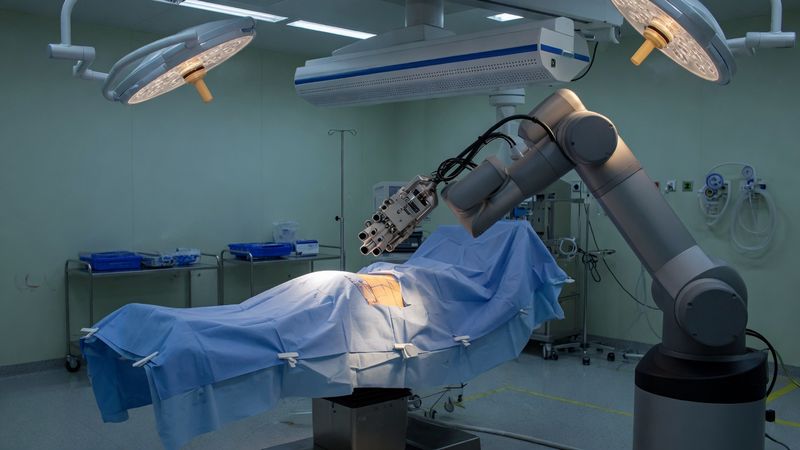
A planned total hip replacement. A robotic-arm system helps Dr. Michele R. D’Apuzzo map the hip and guide bone work. He stays in control of every step. The robot does not operate on its own.
Downtown / Midtown Miami
1321 NW 14th St, Suite 306
Miami, FL 33125
North Miami / Aventura / Broward
2111 Sole Mia Way, 3rd Floor
North Miami, FL 33181
How the robot is used
Before surgery, imaging is used to build a 3-D model of your hip.
In the operating room, the system is matched to your anatomy so the plan lines up with the real hip.
Robotic-arm tools help prepare bone and place the cup within the planned position. Leg length and offset can be checked as he works.
He still chooses implant size, stability, and the final position. If the plan needs to change, he changes it.
The robot is a planning and guidance tool. It does not replace surgical judgment. Primary cases.
This page
A visit is the place to review your history, exam, and imaging together. You leave with a yes, a not-yet, or a different plan. This page cannot tell you that you have arthritis, osteonecrosis, or any other diagnosis.
Dr. D’Apuzzo is a Professor of Clinical Orthopaedics at the University of Miami Miller School of Medicine. He is Director of the Adult Reconstruction Fellowship and Director of Quality and Safety for Joint Replacement. He sees patients at Tower West and SoLé Mia. English and Spanish.
Hours: Monday–Friday, 8:00am–4:30pm on the Contact page. After hours, urgent (not 911): (305) 243-1000. Emergency: 911.
Who may be a candidate
People look into robotic total hip replacement when hip pain or stiffness still limits daily life after activity changes, physical therapy, walking supports, or medicines. AAOS patient education describes this as a shared decision with your surgeon — not a decision based on age alone. There is no single age or weight cutoff.
Hip pain that makes walking, bending, or getting out of a chair hard.
Hip pain that continues at rest or at night.
Stiffness that limits lifting the leg or putting on shoes and socks.
Limited relief from non-surgical care. See conservative care.
Robotic assistance is used for many primary (first-time) hip replacements in this practice. That decision is made in clinic.
Decided in clinicImaging (usually X-rays; sometimes other studies) helps show the joint. Surgery is considered based on pain, function, and overall health. Options that are not replacement are discussed when those still fit. See all treatments and your journey.
Not a diagnosis on this pagePhysical therapy, medicines, and injections with UHealth colleagues. That ladder is on the conservative care page. It is a usual order, not a requirement.
Education and contactsThe procedure
A total hip replacement removes the worn ball of the thigh bone and prepares the socket. Smooth implant parts then take their place: a stem and ball on the thigh-bone side, and a cup with a liner in the pelvis. AAOS describes this as a well-studied operation that can reduce pain and help many people return to everyday activity. Results vary.
Surgery is usually about one to two hours of operative time in standard AAOS patient education. Your time in the hospital or surgery area is longer because of anesthesia, recovery, and walking practice.
For robotic hip replacement, Dr. D’Apuzzo uses a minimally invasive posterior, piriformis-sparing approach. The incision is at the back of the hip. The goal is to reach the joint while sparing the piriformis tendon when the anatomy allows. The abductor muscles on the side of the hip are not the path of this approach.
Not a ranked comparison of approachesThis is an approach choice, not a promise of a smaller scar or a faster recovery than every other method. This page does not rank surgical approaches. Hip precautions, if any, are given to you in writing after surgery.
Written after surgeryThe robot adds 3-D planning and guided bone work. It does not change the basic idea of replacing the ball and socket. It does not guarantee less pain or a faster recovery.
Surgeon-ledAfter surgery
“Rapid recovery” here means a pathway. AAHKS describes outpatient and early-discharge joint replacement as safe for selected patients when the team, the home setup, and the medical picture line up. Same-day discharge is a shared decision. It is not the plan for everyone. More on outpatient joint replacement and the full journey.
Stand and walk with a therapist or trained staff when you are medically ready. Practice transfers and, if needed, stairs.
When medically readyHome the same day when appropriate, or an overnight stay when that is safer. Home support, stairs, and medical conditions all matter.
Selected patientsA walking program and hip-strength work. AAOS patient education notes that many people resume most light daily activities within about 3 to 6 weeks. That is published general guidance, not your personal timeline.
Written milestones for youWalking, swimming, cycling, and golf are a common long-term goal in AAOS materials. High-impact running or jumping is usually discouraged. Do not use another patient’s timeline.
Your plan is set in clinicAAHKS guidelines support multimodal anesthesia and analgesia. The aim is to control pain and reduce opioid use so you can walk early. A plan may combine spinal or other regional anesthesia, acetaminophen, anti-inflammatory medicine when safe, and local numbing medicine around the hip.
A short opioid prescription only if you still need it, then a plan to taper as pain eases. Opioids can cause sleepiness, constipation, and nausea. They can be habit-forming. Use them only as directed.
Call the office if pain is not easing as expected. After hours: (305) 243-1000. Emergency: 911.
Why this approach
The robot helps with a 3-D plan and guided bone work. Dr. D’Apuzzo still performs the operation.
Chosen for exposure of the joint and for sparing the piriformis tendon when possible. This page does not rank surgical approaches.
Visits at Tower West and SoLé Mia. Both are primary sites.
Mayo Clinic, University of Virginia residency, Hospital for Special Surgery fellowship. Fellow of AAOS, AAHKS, and AOA. President of the Miami Orthopaedic Society. Board of the Florida Orthopaedic Society. Full bio.
He directs quality and safety for joint replacement at the University of Miami. That role is about systems and follow-up, not a claim of a unique result.
OrthoInfo and AAHKS patient pages speak in general terms. Your own plan is set in clinic.
Questions
It is a total hip replacement in which a robotic-arm system helps the surgeon plan and guide bone preparation and implant position. The surgeon still does the operation.
Yes. Dr. D’Apuzzo offers robotic total hip replacement at UHealth in Miami. Call Tower West at (305) 689-2663 or SoLé Mia at (305) 256-4334.
People who still have limiting hip pain or stiffness after non-surgical care may be evaluated. Imaging and a full exam decide whether replacement — and whether a robotic primary plan — is appropriate. This page cannot assign you a diagnosis.
A minimally invasive posterior, piriformis-sparing approach. The incision is at the back of the hip.
The robot adds 3-D planning and guided bone work. It does not change the basic idea of replacing the ball and socket. It does not guarantee less pain or a faster recovery.
Some patients do, when medical and home factors line up. Others stay overnight. AAHKS treats outpatient joint replacement as a selected-patient pathway, not a default.
No. Care is designed to reduce opioid use with multimodal anesthesia and analgesia. Some people still need a short course of opioid medicine.
Yes. Tower West (Downtown / Midtown) and SoLé Mia (North Miami / Aventura / Broward) are both primary sites.
Yes. English and Spanish are spoken in clinic. A Spanish page is at reemplazo robótico de cadera.
Read more in Patient education.
This page does not publish patient stories. To read reviews, use the UHealth profile or the official Google listing for each campus. Educational information. Not medical advice. Not a diagnosis. Medically reviewed by Michele R. D’Apuzzo, MD, August 29, 2026.
Call or book
English and Spanish. Same-week visits are often possible.
Monday–Friday, 8:00am–4:30pm. After hours (urgent, not 911): (305) 243-1000.