UHealth Tower West
Downtown / Midtown Miami
1321 NW 14th St, Suite 306
Miami, FL 33125
Treatments · Knee
A planned total knee replacement. A robotic-arm system helps Dr. Michele R. D’Apuzzo map the knee and guide bone cuts. He stays in control of every step. The robot does not operate on its own.
Downtown / Midtown Miami
1321 NW 14th St, Suite 306
Miami, FL 33125
North Miami / Aventura / Broward
2111 Sole Mia Way, 3rd Floor
North Miami, FL 33181
How the robot is used
Before surgery, imaging is used to build a 3-D model of your knee.
In the operating room, the system is matched to your anatomy so the plan lines up with the real knee.
Robotic-arm tools help make planned bone cuts and check ligament balance as he works.
He still chooses implant size, alignment targets, and soft-tissue balance. If the plan needs to change, he changes it.
The robot is a planning and guidance tool. It does not replace surgical judgment. Primary total knees. Partial-knee use is decided case by case.
This page
A visit is the place to review your history, exam, and imaging together. You leave with a yes, a not-yet, or a different plan. This page cannot tell you that you have arthritis or any other diagnosis.
Dr. D’Apuzzo is a Professor of Clinical Orthopaedics at the University of Miami Miller School of Medicine. He is Director of the Adult Reconstruction Fellowship and Director of Quality and Safety for Joint Replacement. He sees patients at Tower West and SoLé Mia. English and Spanish.
Hours: Monday–Friday, 8:00am–4:30pm on the Contact page. After hours, urgent (not 911): (305) 243-1000. Emergency: 911.
Who may be a candidate
People look into robotic total knee replacement when knee pain or stiffness still limits daily life after activity changes, physical therapy, braces or walking supports, medicines, or injections. AAOS patient education describes this as a shared decision with your surgeon — not a decision based on age alone. There is no single age or weight cutoff.
Knee pain or stiffness that makes walking, stairs, or getting out of a chair hard.
Knee pain that continues at rest or at night.
Swelling that keeps coming back after rest or medicine.
Limited relief from non-surgical care. See conservative care.
Robotic assistance is used for many primary (first-time) total knee replacements here. That decision is made in clinic.
Decided in clinicThis practice also discusses partial knee replacement when only one part of the knee is worn. Whether a partial knee is done with the robot is decided case by case.
Case by caseSurgery is considered based on pain, function, alignment, and overall health. Imaging (usually X-rays; sometimes other studies) helps show the joint. Options that are not replacement are discussed when those still fit. See all treatments and your journey.
Not a diagnosis on this pageThe procedure
A total knee replacement resurfaces the worn ends of the thigh bone and shin bone. Metal parts take the place of those surfaces. A medical-grade plastic spacer sits between them. The underside of the kneecap may also be resurfaced. AAOS notes that the operation can reduce pain, improve alignment, and help many people return to everyday activity. Results vary. Full motion is uncommon. The motion you have before surgery often predicts the motion you have after.
Surgery is usually about one to two hours of operative time in standard AAOS patient education. Your time in the hospital or surgery area is longer because of anesthesia, recovery, and walking practice.
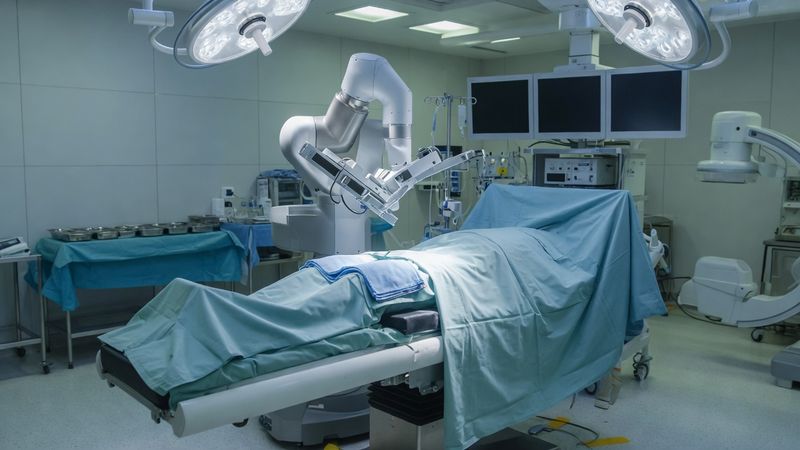
The robot adds 3-D planning and guided bone cuts. It does not change the basic idea of resurfacing the knee. It does not guarantee less pain or a faster recovery. It does not replace surgical judgment.
Surgeon-ledRobotic assistance is for many primary total knees. Partial-knee use of the robot is decided case by case.
Not every casePhysical therapy, medicines, and injections with UHealth colleagues. That ladder is on the conservative care page. It is a usual order, not a requirement.
Education and contactsAfter surgery
“Rapid recovery” here means a pathway. AAHKS describes outpatient and early-discharge joint replacement as safe for selected patients when the team, the home setup, and the medical picture line up. Same-day discharge is a shared decision. It is not the plan for everyone. More on outpatient joint replacement and the full journey.
Stand and walk with a therapist or trained staff when you are medically ready. Begin gentle knee motion. Practice transfers and, if needed, stairs.
When medically readyHome the same day when appropriate, or an overnight stay when that is safer.
Selected patientsA walking program plus motion and strength work. AAOS patient education notes that many people resume most light daily activities within about 3 to 6 weeks. That is published general guidance, not your personal timeline.
Written milestones for youAAOS materials often discuss driving around 4 to 6 weeks, and only when you are off sedating medicine. Your own clearance comes from Dr. D’Apuzzo. Low-impact activity (walking, swimming, cycling, golf) is a common long-term goal. High-impact running or jumping is usually discouraged.
Do not use another patient’s timelineAAHKS guidelines support multimodal anesthesia and analgesia. The aim is to control pain and reduce opioid use so you can walk and bend the knee early. A plan may combine spinal or other regional anesthesia, a nerve block when appropriate, acetaminophen, anti-inflammatory medicine when safe, and local numbing medicine around the knee.
A short opioid prescription only if you still need it, then a plan to taper as pain eases. Opioids can cause sleepiness, constipation, and nausea. They can be habit-forming. Use them only as directed.
After hours: (305) 243-1000. Emergency: 911.
Why this approach
The robot helps with a 3-D plan, guided cuts, and balance checks. Dr. D’Apuzzo still performs the operation.
Robotic assistance is for many primary total knees. Partial-knee use is decided case by case.
Visits at Tower West and SoLé Mia. Both are primary sites.
Mayo Clinic, University of Virginia, Hospital for Special Surgery. Fellow of AAOS, AAHKS, and AOA. Full bio.
He directs quality and safety for joint replacement at the University of Miami. That role is about systems and follow-up, not a claim of a unique result.
OrthoInfo and AAHKS patient pages speak in general terms. Your own plan is set in clinic.
Questions
It is a total knee replacement in which a robotic-arm system helps the surgeon plan and guide bone cuts and implant position. The surgeon still does the operation.
Yes. Dr. D’Apuzzo offers robotic total knee replacement at UHealth in Miami. Call Tower West at (305) 689-2663 or SoLé Mia at (305) 256-4334.
People who still have limiting knee pain or stiffness after non-surgical care may be evaluated. Imaging and a full exam decide whether replacement — and whether a robotic primary plan — is appropriate. This page cannot assign you a diagnosis.
Partial knee replacement is discussed when only one part of the knee is worn. Whether that operation uses the robot is decided case by case.
The robot adds 3-D planning and guided bone cuts. It does not change the basic idea of resurfacing the knee. It does not guarantee less pain or a faster recovery.
Some patients do, when medical and home factors line up. Others stay overnight. AAHKS treats outpatient joint replacement as a selected-patient pathway, not a default.
No. Care is designed to reduce opioid use with multimodal anesthesia and analgesia. Some people still need a short course of opioid medicine.
Yes. Tower West (Downtown / Midtown) and SoLé Mia (North Miami / Aventura / Broward) are both primary sites.
Yes. English and Spanish are spoken in clinic. A Spanish page is at reemplazo robótico de rodilla.
Read more in Patient education.
This page does not publish patient stories. To read reviews, use the UHealth profile or the official Google listing for each campus. Educational information. Not medical advice. Not a diagnosis. Medically reviewed by Michele R. D’Apuzzo, MD, August 29, 2026.
Call or book
English and Spanish. Same-week visits are often possible.
Monday–Friday, 8:00am–4:30pm. After hours (urgent, not 911): (305) 243-1000.